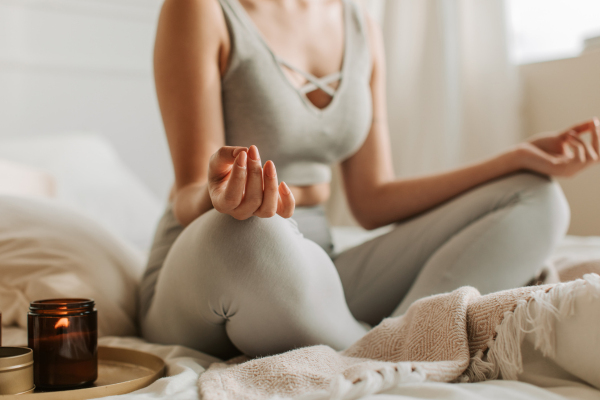
In the busy world we live in, finding moments of peace and tranquility has become essential for taking care of our mental and emotional health. Meditation is an ancient practice that has gained increasing popularity in recent years due to its proven benefits. In this article, we will explore three widely known meditation techniques: mindfulness, transcendental meditation, and guided meditation. We will understand what they are, how to practice them, and how they can help us find serenity and balance in our daily lives.
Mindfulness: The Art of Present-Moment Awareness
Mindfulness, also known as present-moment awareness, is a meditation technique that invites us to be fully present in the current moment, cultivating a mindful awareness of our sensations, emotions, and thoughts. The practice of mindfulness involves observing our thoughts without judgment and directing our attention to the present moment. Through this technique, we can learn to deal with stress, anxiety, and cultivate a state of inner tranquility.
When practicing mindfulness, the goal is not to suppress or control our thoughts but to observe them with curiosity and acceptance. We can start by paying attention to our breath, bodily sensations, and the sounds around us. As we progress in the practice, we can apply mindfulness to other activities such as eating, walking, or even social interactions. Mindfulness helps us develop a greater awareness of the present moment and relate more consciously to our experiences.
Transcendental Meditation: Reaching a Deep State of Relaxation
Transcendental meditation is a technique that seeks to transcend thoughts and achieve a deep state of relaxation and expanded awareness. In this technique, we use a mantra – a specific word or sound – as a focal point to calm the mind and enter a state of inner stillness. Transcendental meditation is practiced for 20 minutes, twice a day, and has been associated with benefits such as stress reduction, increased creativity, and overall improved health.
To practice transcendental meditation, we choose a suitable mantra and repeat it softly and silently, allowing the mind to settle into a state of profound calm and serenity. During the practice, we may notice thoughts arising and dissipating, but the intention is to gently return to the mantra, letting go of any engagement with the thoughts. Transcendental meditation helps us connect with a state of peaceful consciousness and awaken our deeper inner connection.
Guided Meditation: Finding Inner Guidance
Guided meditation is a technique in which we are led by an instructor or an audio recording that guides us through visualizations and verbal instructions. This technique is especially useful for beginners as it provides guidance and support during the practice. Guided meditation can address different themes such as relaxation, self-compassion, gratitude, or even the exploration of specific emotions. It is an effective way to connect with inner guidance and cultivate a state of deep relaxation.
To practice guided meditation, we choose a reliable recording or app that guides us through a sequence of visualizations and instructions. We may be guided to imagine a peaceful environment, explore sensations in the body, or focus on specific positive emotions or mental states. Guided meditation helps us relax, develop greater self-understanding, and connect with our inner wisdom.
Benefits of Meditation: Mind, Body, and Emotions
Regular meditation practice, regardless of the chosen technique, brings a series of benefits to the mind, body, and emotions. Scientific studies have shown that meditation can reduce stress, anxiety, and depression, improve sleep quality, strengthen the immune system, and increase overall well-being. Additionally, meditation helps us develop greater mental clarity, focus, and emotional resilience.
Regular meditation practice can bring benefits such as:
- Stress reduction: Meditation helps calm the nervous system, reducing cortisol levels, the stress hormone, in the body.
- Improved focus and concentration: Meditation strengthens our ability to concentrate, allowing us to be more present and attentive in daily activities.
- Increased creativity: Meditation creates space for new ideas and insights to emerge, stimulating creativity and problem-solving.
- Better sleep: Regular meditation practice can help relax the body and calm the mind, promoting deeper and more restful sleep.
- Enhanced self-compassion and emotional well-being: Meditation helps us cultivate an attitude of self-compassion and acceptance, promoting emotional well-being and self-awareness.
How to Start a Meditation Practice
To start a meditation practice, it is important to set aside time regularly to dedicate to the practice. Begin with short sessions, 5 to 10 minutes, and gradually increase as you feel more comfortable. Find a quiet place where you can sit comfortably and choose the technique that resonates with you the most.
Establish a daily meditation routine by choosing a time when you can commit regularly. It can be early in the morning before starting your activities or in the evening before bedtime. The important thing is to find a time when you can dedicate yourself to the practice without interruptions.
Tips for Deepening the Practice
To deepen your meditation practice, you can consider participating in meditation retreats, seeking guidance from an experienced instructor, or using apps and online resources that offer guided meditations. Additionally, practicing meditation regularly and integrating it into your daily routine can bring more lasting and profound benefits.
Exploring different meditation techniques can also be enriching. Try combining techniques, such as practicing mindfulness in everyday moments and reserving specific times for transcendental meditation or guided meditation. Find the balance that works best for you and be open to exploring new approaches.
Challenges in Meditation Practice
It is important to mention that meditation practice can present challenges, especially for beginners. It is common for the mind to wander, and thoughts and distractions to arise during meditation. It is important to remember that this is part of the process and should not be a source of frustration. The practice consists of gently redirecting attention to the present moment without judgment.
Furthermore, consistency is key in meditation. Like any skill, the benefits of meditation develop with regular practice over time. Therefore, have patience and perseverance as you embark on your meditation journey.
Conclusion
Meditation techniques such as mindfulness, transcendental meditation, and guided meditation offer powerful tools for finding serenity and balance amidst the busyness of the modern world. With regular practice, we can cultivate greater awareness, inner tranquility, and well-being in all aspects of our lives.
Explore different meditation techniques, find the one that resonates with you the most, and start reaping the benefits of this journey of self-discovery and transformation. Remember that there is no one-size-fits-all meditation technique that is best for everyone. Each person may find different benefits in different techniques. The key is to find the one that fits best in your life and allows you to connect with yourself authentically. Open yourself to the practice of meditation and allow it to bring balance, serenity, and well-being to your life.